The choice between eggshell vs. semi-gloss paint usually shows up after color is already decided. That is when things get confusing. Two finishes can look similar on a small sample yet behave very differently once they are on the wall, trim, or door. The finish affects reflection, cleaning, moisture resistance, and how long the paint holds up under daily use.
This guide breaks down eggshell vs. semi-gloss paint in a practical way. Just clear explanations so you can see why one finish works better than the other depending on where it is used.
Key Takeaways:
- Eggshell vs. semi-gloss paint comes down to surface use, not personal taste. Walls benefit from eggshell, while trim and doors perform better with semi-gloss.
- Eggshell paint softens light and hides minor surface flaws, making it a strong choice for living spaces and bedrooms.
- Semi-gloss paint handles moisture, fingerprints, and frequent cleaning, which is why it is used on trim, cabinets, and bathrooms.
- Lighting and color depth change how each finish looks once dry, so sheen impacts the final appearance as much as color does.
- Choosing the right finish upfront helps paint last longer and keeps surfaces looking clean without constant touch-ups.
Why Finish Selection Changes How Paint Performs
Paint is more than color. The sheen controls how light reacts with the surface and how the paint film protects what is underneath.
With eggshell vs. semi-gloss paint, the difference shows up in a few core areas:
-
Light reflection and glare
-
Resistance to water and mildew
-
Ease of cleaning
-
How visible wall texture becomes
These details matter on drywall, wood trim, masonry, brick, siding, and concrete surfaces.
Eggshell Paint And Why It Is So Popular On Walls
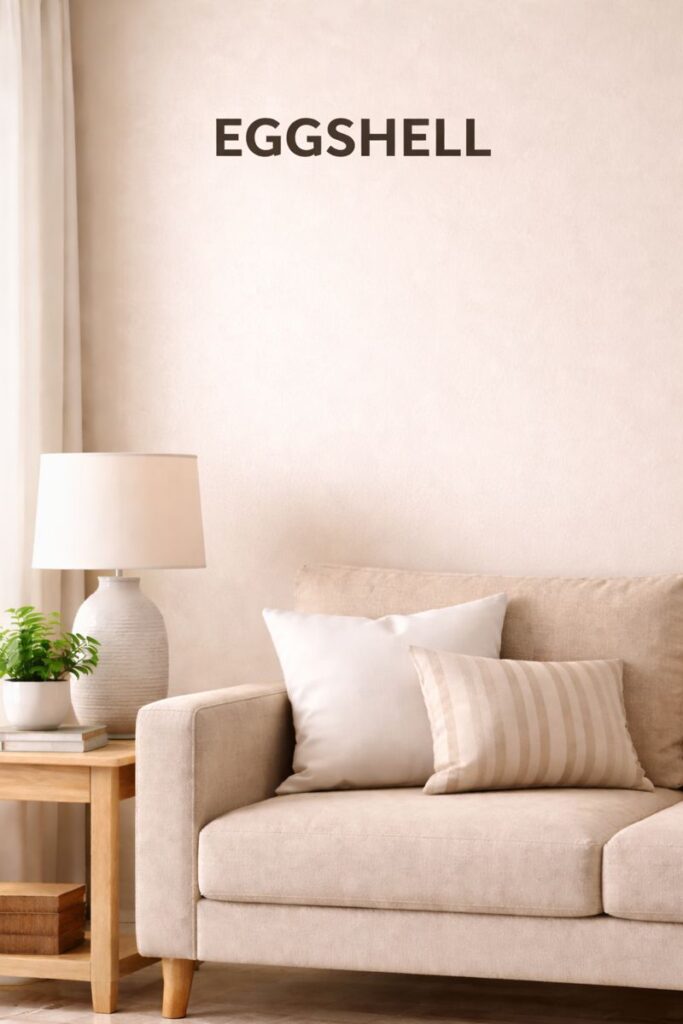
Eggshell paint sits between flat and satin. It has a soft glow that feels natural in most rooms.
Many homeowners like eggshell because it balances appearance and performance. It does not look chalky, yet it does not reflect light like gloss finishes.
Where Eggshell Paint Works Best
Eggshell paint is commonly used on interior walls such as:
-
Living rooms and family rooms
-
Bedrooms and offices
-
Hallways with moderate foot traffic
-
Dining areas
Large wall surfaces benefit from eggshell because it softens light and helps hide minor surface issues like nail patches or uneven drywall seams.
This finish pairs well with lighter color schemes and even deeper colors where too much shine would feel distracting.
Situations Where Eggshell Paint Falls Short
Eggshell paint is not designed for constant cleaning. Repeated wiping with water or cleaning products can wear down the surface faster than glossier options.
Rooms with high moisture or grease exposure often push eggshell beyond what it handles well. Bathrooms, kitchens, and laundry areas usually need a finish with stronger water resistance.
This is where eggshell vs. semi-gloss paint becomes an important decision instead of a cosmetic one.
Semi-Gloss Paint And What Makes It Different
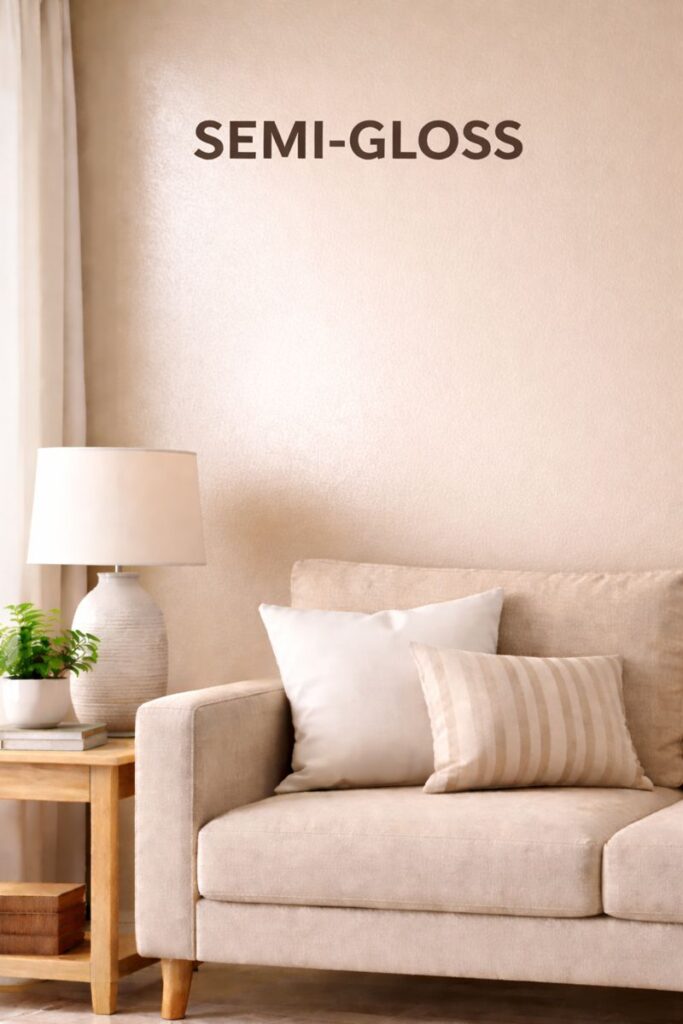
Semi-gloss paint has a noticeable shine. That shine comes from a higher resin content, which gives the paint stronger adhesion and durability.
Because of that, semi-gloss paint is used where hands, moisture, and cleaning are part of everyday life.
Common Uses For Semi-Gloss Paint
Semi-gloss paint is typically applied to:
-
Doors and door frames
-
Baseboards and trim
-
Windows and window casings
-
Cabinets
-
Bathrooms and kitchens
These surfaces benefit from a finish that resists water, mildew, and wear while staying easy to clean.
The Tradeoff With Semi-Gloss Paint
While semi-gloss is durable, it does not hide flaws well. Light reflection makes dents, sanding marks, and uneven wood grain easier to spot.
On older homes, especially those with layered paint or worn trim, surface prep plays a major role in how semi-gloss looks once applied.
This is why professional painters treat semi-gloss differently than eggshell during prep and priming.
Light, Color, And How Sheen Changes The Look
Lighting affects how eggshell vs. semi-gloss paint appears once it dries. Natural light, overhead fixtures, and lamps all interact with sheen in different ways.
- Semi-gloss reflects light strongly. On trim or doors, that reflection adds definition. On walls, it can feel harsh.
- Eggshell diffuses light. This creates a softer look that works well in living spaces.
Color depth is also affected by sheen. If you have ever wondered does paint dry darker or lighter, finish plays a role along with pigment and lighting.
Cleaning And Maintenance In Real Life
Durability is one of the biggest reasons homeowners lean toward semi-gloss in certain areas.
Cleaning comparison:
-
Eggshell handles light cleaning and dusting
-
Semi-gloss tolerates frequent wiping and moisture
For surfaces that see fingerprints, splashes, or regular contact, semi-gloss holds up longer. Eggshell still performs better than flat paint, but it is not meant for heavy scrubbing.
Texture, Feel And Application Differences
Once cured, eggshell paint feels smooth and dry. It does not attract dust easily.
Semi-gloss paint can feel slightly tacky in humid conditions, especially if coats are applied too quickly. Proper drying time between coats reduces this issue and improves long-term performance.
Because semi-gloss shows more detail, surface prep often includes sanding, priming, and correcting imperfections before the final coat is applied.
Cost Versus Long-Term Value
Eggshell paint usually costs less per gallon than semi-gloss paint. The difference comes from resin content and durability.
While the price gap may seem small, it adds up on larger projects. Still, finish choice should not be based on cost alone.
A finish that wears out early or highlights flaws often leads to repainting sooner than expected. Choosing the right sheen from the start protects the investment.
If you are estimating quantities across rooms and finishes, a paint calculator helps plan coats accurately without overbuying.
How Eggshell Vs. Semi-Gloss Paint Fits With Other Sheens
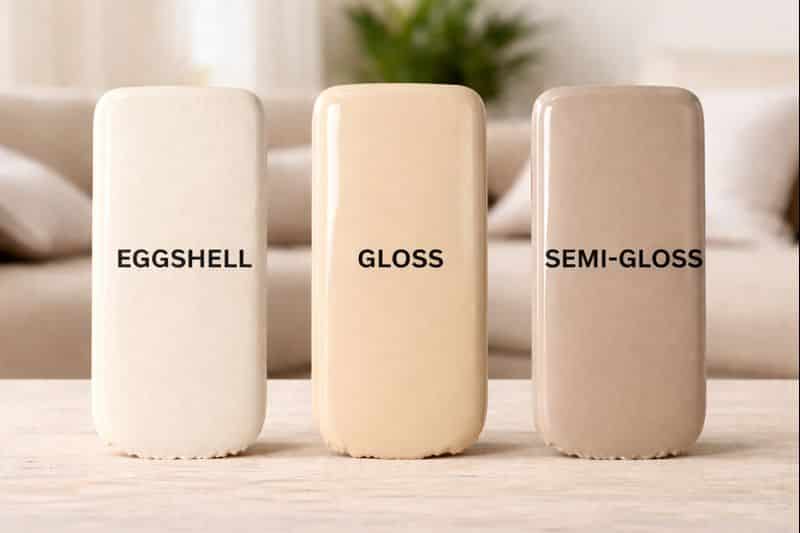
Many homeowners compare more than two finishes at once. Satin and matte often enter the conversation.
Understanding how sheen works across spaces helps avoid mismatch between walls, trim, and exterior surfaces. For a broader look at how finishes change based on location and exposure, the different paint sheen for interior vs exterior explains why environment matters.
Tools like paint color visualizers also help show how color and sheen interact before paint is applied. This can be helpful when coordinating walls with trim or brick accents.
Interior Versus Exterior Finish Considerations
While this guide focuses on interiors, finish choice matters outside as well.
- Exterior paint types deal with sun, water, temperature changes, and mildew. Semi-gloss and satin finishes are often used on exterior trim, siding, and doors for added protection.
- Eggshell is less common outdoors but may appear on covered porch ceilings or sheltered masonry areas when glare reduction is preferred.
- Latex and acrylic paint formulas are common for both interior and exterior use due to their flexibility and adhesion. Primer selection also affects how well each finish performs over wood, stucco, concrete, and siding.
How Professionals Choose The Right Finish
At A New View Painting, finish selection is part of the planning process, not an afterthought.
Our approach includes:
-
Evaluating how each surface is used day to day
-
Reviewing lighting and surface conditions
-
Matching sheen to durability needs
-
Coordinating walls, trim, and doors so the space feels balanced
This method helps homeowners feel confident when comparing eggshell vs. semi-gloss paint without feeling pushed toward one option.
A Practical Takeaway On Eggshell Vs. Semi-Gloss Paint
Choosing eggshell vs. semi-gloss paint is about matching the finish to the job. Eggshell works well on walls where softness and subtle reflection matter. Semi-gloss belongs on surfaces that deal with contact, moisture, and frequent cleaning. Light, color, and surface condition all affect how each finish looks once applied. Thoughtful selection leads to better durability and a more polished result. The right finish supports the space instead of calling attention to itself.
If you are looking for experienced painters near you, A New View Painting serves Boulder, Longmont, Frederick and the surrounding areas.
Call us at 970-660-3993 for a FREE estimate and guidance that makes paint decisions feel clear and manageable.