If you have ever stood in the paint aisle staring at sheen labels, you are not alone. Satin paint vs. Matte paint is one of the most common decisions homeowners wrestle with, and for good reason. The same color can look calm and soft in one finish, then brighter and more defined in another.
This choice shows up everywhere. Walls, ceilings, trim, and even oak kitchen cabinets all react differently depending on sheen. The goal here is simple. Break down what satin paint and matte paint actually do, how they behave in real homes, and where each one makes sense so your space looks right and holds up over time.
Key Takeaways:
- Satin paint vs. Matte paint changes how color appears, how light reflects, and how surfaces wear.
- Matte paint hides wall imperfections well and fits low-traffic rooms.
- Satin paint cleans easier and holds up better in kitchens, bathrooms, and oak kitchen cabinets.
- Natural light can make satin feel brighter while matte softens glare.
- Picking sheen based on room use leads to better results over time.
Why Paint Sheen Changes Everything
Paint sheen controls how light hits a surface. That alone affects how big a room feels, how smooth a wall looks, and how often it needs cleaning.
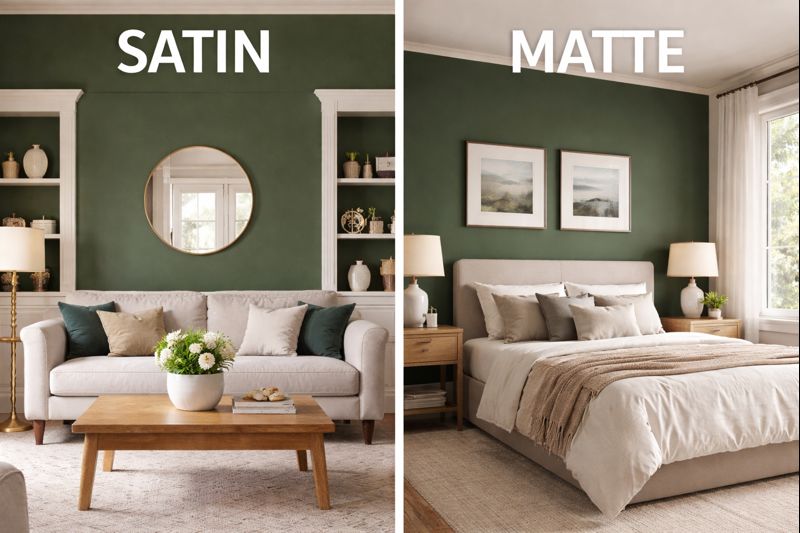
With Satin paint vs. Matte paint, you are choosing between light reflection and light absorption. Satin reflects more light and adds a gentle glow. Matte absorbs light and softens the surface.
This matters more than most people expect, especially in Colorado homes where natural light changes throughout the day.
Matte Paint: Calm, Soft, and Forgiving
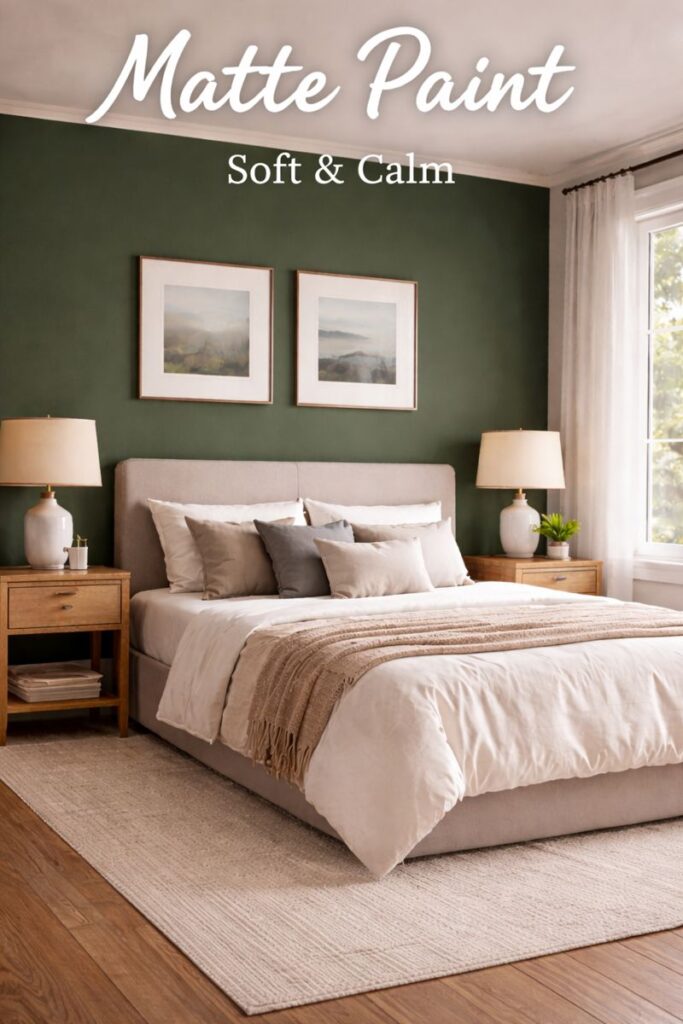
Matte paint sits at the low end of the sheen scale. It has very little shine, which gives it a smooth and even appearance.
Where Matte Paint Works Best
Matte paint is commonly used on walls and ceilings where visual softness matters more than durability.
It works well in:
- Bedrooms
- Living rooms
- Dining rooms
- Ceilings with patching or surface variations
Because matte paint absorbs light, it helps tone down texture and hide flaws. Older walls, repaired drywall, and uneven surfaces benefit from this finish.
Visual Feel of Matte Paint
Matte paint creates a flat, velvety look. Colors appear deeper and more grounded, which many homeowners prefer in relaxed spaces.
However, in smaller or darker rooms, matte paint can make the space feel more enclosed since it does not bounce light around.
If you are weighing how color behaves across finishes, understanding does paint dry darker or lighter can help set expectations before final selection.
Durability and Cleaning
This is where matte paint has limits.
Matte paint is not designed for frequent wiping. Oils from hands, scuffs, and marks can show quickly, especially in high traffic areas.
For this reason, matte paint is usually avoided in hallways, kitchens, and bathrooms unless a specialized washable formula is selected.
Cost and Coverage
Matte paint often costs less per gallon than satin paint. It also has higher pigment levels, which can lead to strong coverage and fewer visible lap marks.
That combination makes it a popular option for large wall areas where consistency matters.
Satin Paint: Balanced Shine with Practical Strength
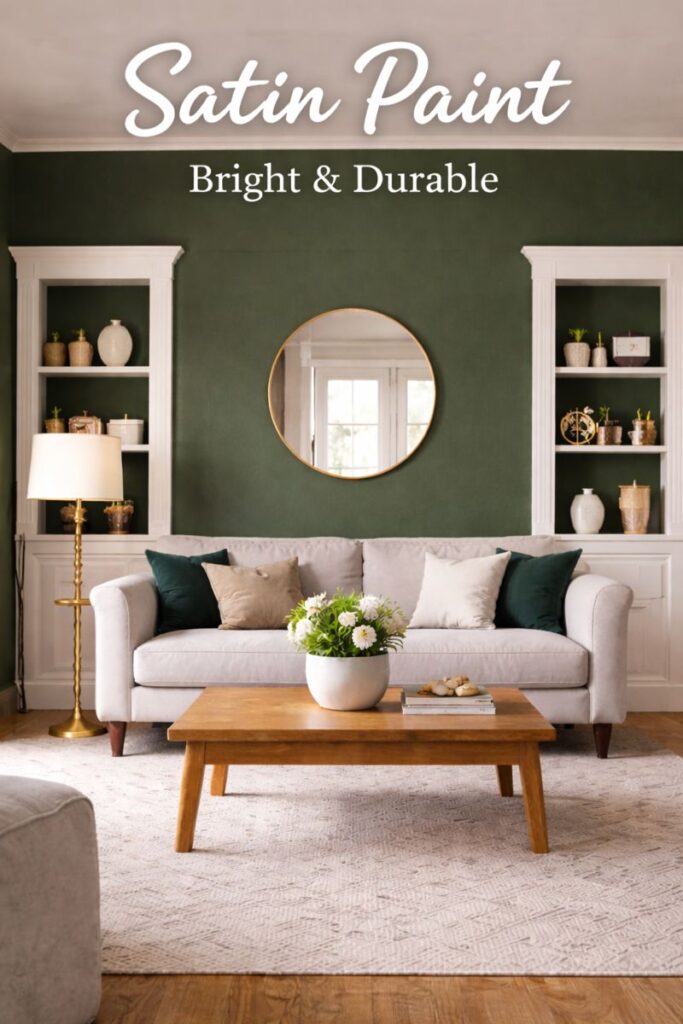
Satin paint lands in the middle of the sheen range. It has a soft glow that reflects light without looking glossy.
Why Satin Paint Is So Common
In the Satin paint vs. Matte paint comparison, satin often feels like the safer middle ground.
Satin paint is frequently used in:
- Kitchens
- Bathrooms
- Hallways
- Entryways
- Trim and doors
- Oak kitchen cabinets
Its durability makes it well suited for spaces that see regular use and cleaning.
How Satin Paint Looks in Real Spaces
Satin paint reflects more light, which can help rooms feel brighter and more open. This can be especially helpful in kitchens and bathrooms where lighting plays a big role.
On oak kitchen cabinets, satin paint adds definition without turning the surface into a mirror. It highlights the structure while keeping the finish controlled.
That same reflectivity also means surface prep matters. Satin paint can show dents, roller marks, and uneven areas more easily than matte.
Cleaning and Longevity
Satin paint stands up better to moisture, wiping, and daily wear.
It is easier to clean than matte paint, which makes it a strong choice for families, pets, and busy households. Over time, satin finishes also tend to hold up longer in areas with frequent contact.
Comparing Texture and Touch
Texture is often overlooked, but it changes how paint feels and performs.
Matte paint has a smooth, slightly chalky feel. It does not feel sticky or slick, which contributes to its soft appearance.
Satin paint feels smoother and slightly tacky due to the resins used to create its sheen. That added structure helps resist scuffs and moisture but also increases visibility of imperfections.
Light, Space, and Reflection
Lighting plays a major role in the Satin paint vs. Matte paint decision.
Matte Paint and Light
Matte paint absorbs light, which helps control glare. This works well in rooms with large windows or strong sunlight where the shine might feel distracting.
However, in low-light rooms, matte paint can make spaces feel darker and smaller.
Satin Paint and Light
Satin paint reflects light and adds brightness. This can open up tight spaces and highlight architectural details.
That said, in rooms with intense natural light, satin paint can feel too reflective if not balanced carefully.
Using paint color visualizers can help preview how sheen and color interact before finalizing choices.
Walls vs. Cabinets: Why Placement Matters
Sheen selection changes depending on what is being painted.
Walls benefit from finishes that control texture and glare. Cabinets, doors, and trim need finishes that handle contact and cleaning.
That is why satin paint is often chosen for oak kitchen cabinets while matte paint stays on walls and ceilings.
Understanding different paint sheen for interior vs exterior surfaces also helps clarify why certain finishes last longer in specific conditions.
Moisture and High-Use Areas
Bathrooms, kitchens, and laundry rooms demand more from paint.
Satin paint handles humidity better than matte paint. It resists moisture penetration and cleans more easily, which helps maintain a fresh look over time.
Matte paint in these spaces may wear unevenly or show marks sooner, even with careful use.
Cost Differences Over a Full Project
On average, satin paint costs a few dollars more per gallon than matte paint.
That difference adds up on larger house painting projects, but cost should be weighed against durability and maintenance. Choosing a lower cost finish that needs repainting sooner can offset initial savings.
A paint calculator can help estimate total material needs and give a clearer picture of overall investment.
Common Mistakes Homeowners Make
One common mistake is choosing sheen based on appearance alone.
Another is using the same finish everywhere. Walls, ceilings, trim, and oak kitchen cabinets each have different demands.
Skipping surface prep is also a major issue, especially with satin paint where imperfections stand out more.
How Professionals Approach Satin Paint vs. Matte Paint
Our expert painters in Erie, CO look at the whole picture.
They consider:
- Room size and lighting
- Surface condition
- Traffic and use
- Cleaning needs
- Long-term durability
This approach leads to better results and fewer surprises after the paint dries.
Final Thoughts on Satin Paint vs. Matte Paint
Choosing between Satin paint vs. Matte paint comes down to function, light, and lifestyle. Matte paint offers softness and hides imperfections, making it a strong choice for calm, low-traffic spaces. Satin paint provides durability and easy maintenance, which works well for kitchens, bathrooms, and oak kitchen cabinets. Matching sheen to surface rather than using one finish everywhere leads to better-looking and longer-lasting results.
If you want guidance that fits your home and not a one size answer, A New View Painting serves Erie, Broomfield, Lafayette, and the surrounding areas.
Call us at 970-660-3993 for a FREE estimate and clear direction on your next painting project.