
Standing in the backyard and noticing the fence looking a little tired is something most Erie, CO homeowners go through at some point. That’s when the big question comes up: paint or stain my fence? It sounds simple, but the choice affects how long your fence lasts, how much upkeep you’ll face, and the overall look of your property.
Paint offers bold color and a clean finish. Stain highlights the natural wood grain and adds protection without covering it up. Both options protect against moisture, mold, and wear, but they perform differently in our changing Colorado climate.
Before making a decision, it helps to know what you’re really getting with each option—how they age, what kind of maintenance they require, and which works best for your type of wood. That’s what we’ll cover here.
Key Takeaways:
- Paint gives endless color options but requires sanding, primer, and more prep before each new coat.
- Stain penetrates the wood grain, offering waterproofing and natural aesthetics with easier reapplication.
- In Erie, CO, climate plays a big role—moisture and sun exposure affect longevity for both finishes.
- Paint lasts longer between applications but is prone to peeling, while stain fades more naturally.
- Professional deck painters in Erie, CO can match finishes across fences, decks, and exterior wood for a cohesive look.

Fence Longevity and Weather Protection
One of the first things homeowners ask is, “which lasts longer?” In Erie, CO where snow in the winter and heavy rain in the spring are part of life, longevity matters.
- Stain penetrates deep into the wood grain, which means it offers waterproofing and helps resist mold and mildew. On average, a wood stain should be reapplied every 3 years.
- Paint sits on the surface like a coat of armor. A good quality exterior latex paint, paired with primer, may last 5–6 years before showing signs of blistering or peeling.
The climate plays a big role. Constant moisture and strong sun will test both finishes, but stain tends to fade more naturally while paint can crack and peel. If you want the grain of your wooden fence or deck to stay visible, stain is the better option. If you prefer a bold, solid color that can match your siding or trim, paint might fit better.
Related reading: exterior paint types
Aesthetics and Color Choices
Appearance often decides the debate. If you’re thinking “paint or stain my fence” for purely cosmetic reasons, here’s what to expect:
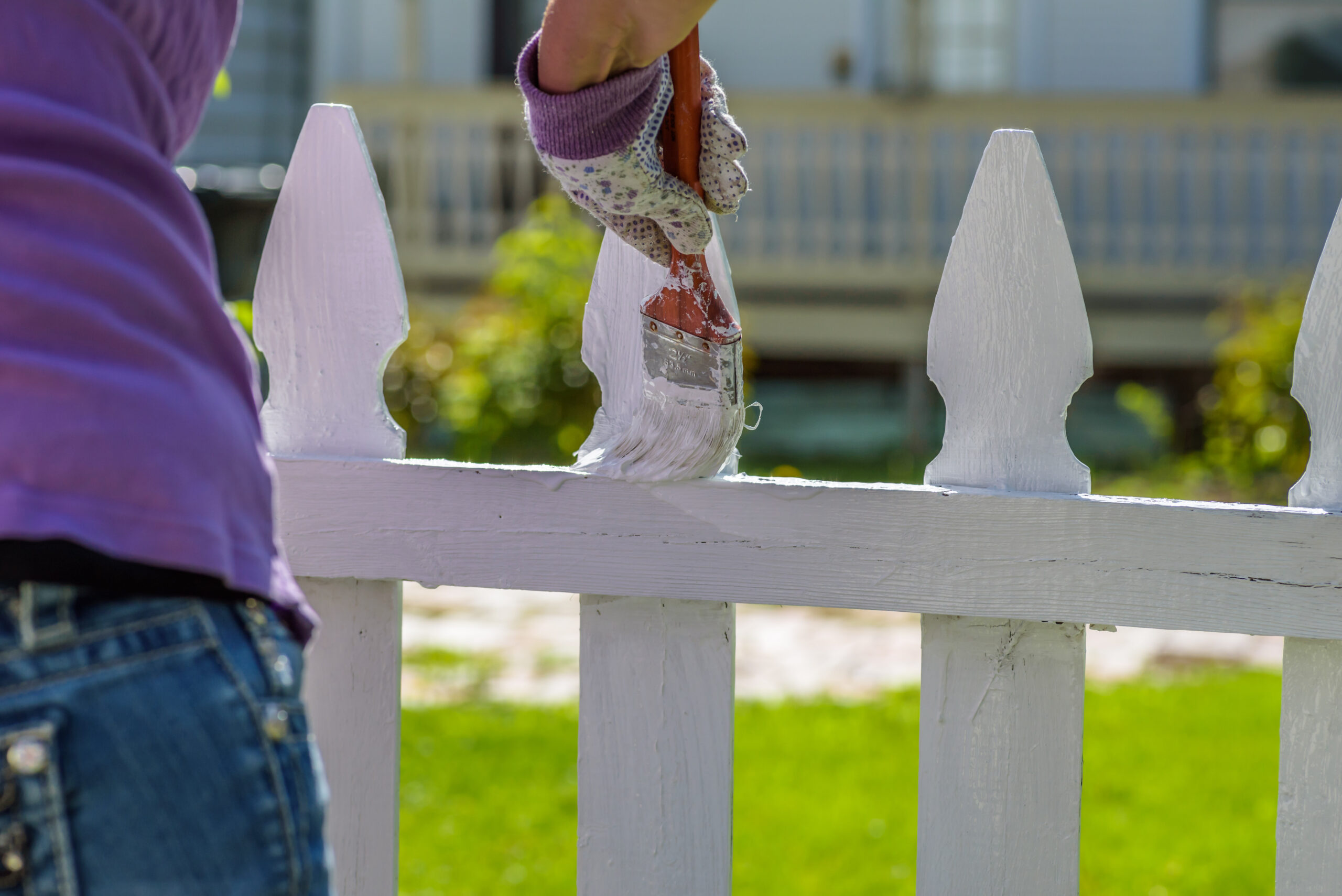
- Paint: Unlimited color options, from natural shades to bright, bold hues. If you’re after a white picket fence look or want a color that matches your trim, paint is your best bet.
- Stain: Limited to natural wood tones, but modern brands like Behr offer pigment-rich stains in gallons that bring out wood’s natural aesthetics while still adding color depth. Solid stains can mimic the look of paint but still show subtle texture.
If you want the natural wood grain to be the star, stain will highlight it beautifully. If you’re after uniformity and a flawless solid finish, paint makes more sense.
Cost and Maintenance
On the surface, paint seems cheaper. A gallon of exterior paint costs less than most stains. But paint requires primer, extra coats, and more prep work. Stain costs more upfront but often balances out since you don’t need as much of it.
Maintenance is another big factor. With paint, you’ll eventually need to sand, scrape off peeling layers, and reapply multiple coats. Stain is more forgiving. After pressure washing to remove mildew and dirt, you can apply a fresh coat with a sprayer or brush, no sanding needed.
This is why many homeowners compare their options with fence staining cost before making a final choice.
Application Process: What It Takes
Ease of application isn’t just about time—it’s about what your fence is made of.
- Stain soaks into exterior wood and is applied easily with a sprayer, brush, or even a roller. It doesn’t usually require sanding unless your fence has serious wear.
- Paint requires more prep. You’ll need sandpaper for rough lumber, a primer to help with adhesion, and extra coats to avoid uneven coverage.
Pro tip: Before applying either, give your wood fence or deck a good pressure washing. This clears away mildew, dirt, and old residue so the new finish bonds properly.
Also see: roller painting vs spray painting comparison and what’s best for exterior projects like fences.
Material Matters
Not every fence or deck takes paint and stain the same way. Here’s a closer look:
- Cedar wood: Doesn’t take paint well. Using paint may shorten its lifespan, but oil-based stain or sealant works beautifully.
- Pressure-treated lumber: Can handle both, but stain won’t soak in as deep. It needs time to fully dry before applying.
- Rough-sawn wood: Paint requires extensive prep, while stain penetrates more easily.
The right choice also depends on what’s around your fence. If you’ve got a deck, pergola, or even wooden furniture nearby, keeping finishes consistent in tone and protection can make your outdoor space look more cohesive.
Durability Against Wear and Climate
Erie’s mix of moisture, sun, and snow puts any finish to the test. Stain is flexible—it fades rather than peels, which makes maintenance quicker. Paint, especially latex or oil-based, gives a thicker barrier but can blister when exposed to water and pressure changes.
Adding a sealant on top of stain can extend longevity, while quality brands of paint paired with primer can stretch the lifespan of your fence coat. In both cases, reapplication should be treated like regular maintenance—much like checking for rain damage, mildew spots, or mold buildup.
When Color Meets Function
For some homeowners, the question of “paint or stain my fence” comes down to matching the home’s exterior.
- Want a crisp, bright look that mirrors a classic white picket fence? Paint.
- Want the fence to blend naturally with surrounding landscaping or showcase the wood grain? Stain.
Color also matters with decks. Professional deck painters in Erie, CO often recommend paint if you want a uniform appearance across fencing and decking, but stains are still the go-to for homeowners who want longevity without hiding the wood’s natural grain.
Related read: can i use exterior paint inside when you’re thinking about carrying colors into other spaces.
Extra Factors to Think About
Before choosing, consider these details:
- Moisture levels: Water damage is the biggest culprit for rotting lumber. Both finishes provide moisture resistance, but stain penetrates better.
- Mold and mildew: Look for formulas that contain mildew-resistant additives.
- Brand selection: Not all paints or stains are equal. High-quality options like Behr or other trusted brands hold pigment better and resist blistering.
- Climate: Erie, CO brings rapid changes in weather. Pick a product rated for exterior wood and conditions specific to our area.
Paint or Stain My Fence: Quick Comparison
| Factor | Paint | Stain |
|---|---|---|
| Appearance | Solid color control that hides wood grain; great for matching trim or a white picket fence look | Shows natural grain and texture; available from clear to solid wood stain tones |
| Longevity in Erie climate | About 5 to 6 years with exterior latex and quality primer; may blister or peel if moisture gets trapped | About 3 to 4 years; fades evenly without peeling and can be refreshed more quickly |
| Maintenance | More prep between coats; sanding, scraping, primer, then a fresh coat to handle wear and mold spots | Usually a wash with pressure washing, then recoat; simple upkeep for fences and decks |
| Weather resistance | Forms a surface film that blocks water; sensitive to persistent rain and freeze thaw cycles | Penetrates exterior wood for better moisture control and mildew resistance; add a sealant for extra protection |
| Cost over time | Lower cost per gallon but needs primer and more coats; brand choice and pigment quality matter | Higher per gallon for some brands like Behr, yet less product per coat and no primer required |
| Application | Brush and roller for most fences; sprayer speeds work but still needs primer and careful coverage | Easy with sprayer or brush; soaks into lumber and is forgiving on rough boards |
| Surface prep | Works best on smooth boards; rough sawn sections need sandpaper and a bonding primer | Bonds well to rough or smooth wood after cleaning; solvent or water base options |
| Material notes | Cedar can struggle with paint; pressure treated wood must dry to avoid adhesion issues | Oil based stain excels on cedar and many wooden fence styles; good for furniture accents too |
| Weather window | Can be applied in a broad temperature range when no rain is expected | Best at 50°F or higher with two to three dry days for proper curing |
| Best for | Uniform aesthetics, bold color matching, and a crisp look across fencing and trim | Natural look, visible grain, lower upkeep, and blending decks and fences together |
Making the Choice for Your Fence
So, should you paint or stain my fence? In Erie, CO, the right choice depends on what matters most to you—color flexibility, natural wood aesthetics, or reduced maintenance.
Paint gives you endless color and a bold finish but requires more upkeep. Stain highlights the grain, provides strong waterproofing, and is easier to maintain. Both protect your fence, deck, and exterior wood when applied correctly and with the right prep.
If you’re deciding between paint or stain for your fence or deck, let our team of deck painters in Erie, CO guide you. Call A New View Painting today at 970-660-3993 for a FREE estimate. We proudly serve Erie along with Broomfield, Lafayette, Louisville, CO, and the surrounding areas.