Most homeowners think exterior painting is mostly about the paint. You pick a color, a crew shows up, and it goes on the walls. That’s a fair assumption, but it’s not how a proper job works.
What actually makes an exterior paint job last 7-10 years has very little to do with the paint itself. It comes down to everything that happens before the first brush stroke.
Here’s a clear breakdown of what a full exterior paint job covers, so you know exactly what to expect and what to ask before you hire anyone.
Key Takeaways
It Starts with a Walkthrough, Not a Brush
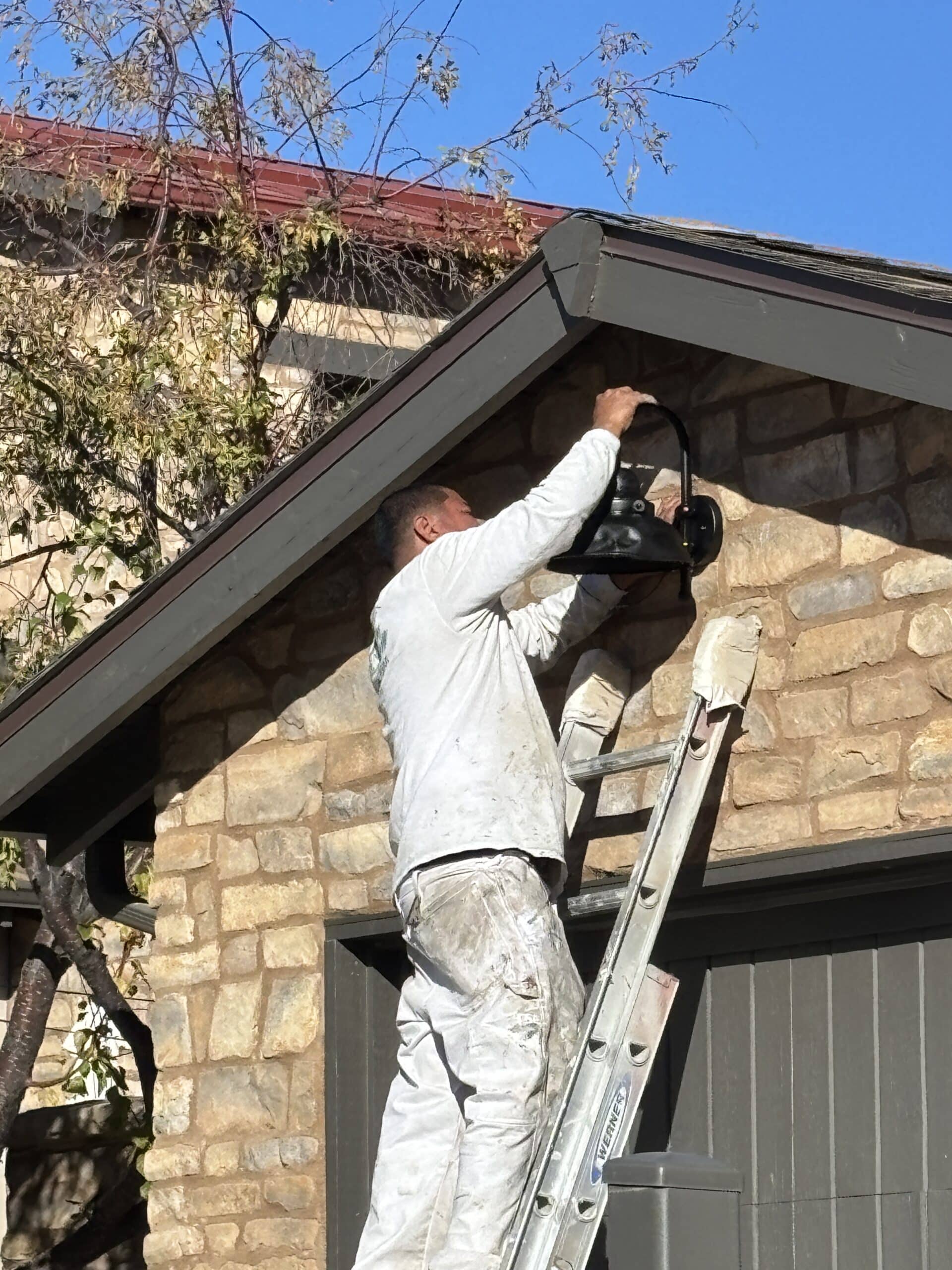
Before any work begins, a good crew walks the full perimeter of your home. They’re looking for wood rot, cracked caulk, damaged siding, lifting paint, and anything else that will cause problems down the line.
This step shapes the entire scope of the job. Skipping it is how you end up with unexpected costs or corners being cut halfway through the project.
Power Washing: the First Real Step
Paint will not stick to a dirty surface. Power washing removes built-up dirt, mold, mildew, and the chalky residue that old paint leaves behind over time.
Paint applied over an uncleaned surface can fail in as little as 1-2 years, even if the product itself is rated to last much longer. Clean, completely dry surfaces are what allow paint to bond correctly and stay put.
For homes built before 1978, power washing also raises the question of lead paint. The EPA’s Renovation, Repair and Painting Program requires contractors to follow specific safety guidelines when working on surfaces that may contain lead-based paint. Any contractor you hire for an older home should be familiar with this requirement.
Repairs Before Paint, Not After
This is where most of the real work happens. Once the surface is clean and dry, damaged areas need to be addressed before any coating goes on.
Painting over damaged surfaces is one of the most common reasons exterior paint jobs fail early. The repairs give the new paint something solid to hold onto, which is what keeps it looking good long after the crew has packed up.
Common repairs at this stage include:
- Replacing rotted fascia boards or window trim
- Re-caulking around windows, doors, and wall penetrations
- Filling cracks in stucco or wood siding
- Scraping and sanding areas with peeling or lifting paint
- Spot-priming bare wood after any carpentry work is done
Don’t skip this step, and don’t let a contractor skip it either. It directly affects how long the finished job holds up.
Picking Your Color: What to Know Before You Commit
Color selection seems straightforward, but exterior paint behaves differently once it’s dry than it does on a sample chip. Light, surface texture, and the sheen you choose all affect how a color reads on the actual wall.
This catches a lot of homeowners off guard. If you’ve picked a color and are second-guessing it before the job starts, understanding how exterior paint dries can save you from a costly color change mid-project.
Primer: the Step That Determines How Long It Lasts
Primer doesn’t always appear in a quote, but it should. A quality primer seals the surface, blocks stains, and creates the bond between the bare material and the topcoat.
The American Coatings Association notes that properly primed surfaces hold up significantly longer, especially in climates with strong UV exposure and wide temperature swings. Northern Colorado checks both of those boxes hard.
Bare wood, patched areas, and repaired spots all need primer before any topcoat goes on. A contractor who skips this step is setting the job up to fail sooner than it should.
The Paint Coats: What Goes on and How Many
A full exterior job typically includes 2 coats of topcoat. The first coat builds coverage. The second coat seals and protects.
The sheen, or finish level, matters just as much as the color. Different surfaces perform better with different finishes, and getting this wrong affects both appearance and how long it holds up. This breakdown of eggshell vs. semi-gloss paint finishes explains how each one performs in real outdoor conditions, which is worth reading before you finalize your product choice.
The number of coats also depends on the condition of the current surface and how dramatic the color change is. Darker colors over light, or light over dark, may require additional coats for full coverage.
Trim, Doors, and the Details That Finish the Job
A full exterior paint job covers more than just the siding. Trim, shutters, soffits, fascia, garage doors, front doors, and gutters are all part of a complete project.
These details are often what separate a finished-looking exterior from one that still looks flat even with freshly painted siding. Trim color in particular has an outsized visual impact on the overall result.
Some surfaces, like wood decks and fences, are typically quoted separately since they involve staining rather than painting. If yours need attention, deck and fence staining is a natural project to pair with an exterior repaint rather than putting it off another season.
Cleanup and the Final Walkthrough
Once the paint is on and fully dry, a professional crew removes all drop cloths, tape, and protective coverings. They also check the full exterior for drips, missed spots, and any overspray that landed where it shouldn’t.
A walkthrough with you before the crew leaves is part of a well-run job. It’s your chance to flag anything before the project is officially closed out.
At A New View Painting, every exterior project comes with a 4-year warranty. If something fails inside that window, it gets handled.
How Long Does a Full Exterior Paint Job Take?
For a typical single-family home, expect 2-5 days from start to finish. Larger homes, more complex rooflines, or more extensive repairs can push that closer to a full week.
Weather matters too. Paint needs dry conditions and temperatures above 50 degrees Fahrenheit to apply and cure properly. In Northern Colorado, the reliable exterior painting window runs from March through November.
If a crew is finishing a full exterior in a single day with no visible prep work happening, that’s a sign worth paying close attention to.
What a Good Job Does for Your Home Long-Term
A properly done exterior paint job protects the wood, siding, and structural materials underneath from moisture, UV damage, and freeze-thaw cycles. Done right, exterior paint should last 7-10 years before needing attention again.
Done poorly, you’re looking at a repaint in 2-3 years and whatever damage built up in between. The difference almost always comes down to prep, product quality, and process.
The National Association of Realtors’ Remodeling Impact Report consistently ranks exterior painting among the top projects for both homeowner satisfaction and return at resale. That’s because it’s one of the few updates that improves protection, curb appeal, and home value at the same time.
Modern exterior paints are also formulated differently than they were 15-20 years ago. If you want to understand how today’s products are built to handle long-term demands in changing climates, the post on sustainable house painting practices breaks down how paint science has evolved and what that means for your home.
Ready to Get a Free Estimate?
Now that you know what goes into a full exterior paint job, you can have a much sharper conversation with any painter you bring out. Ask about prep. Ask about primer. Ask what is included in the quote before you sign anything.
The team at A New View Painting serving Erie, CO has completed 5,000+ projects across Broomfield, Lafayette, Louisville, and the surrounding Northern Colorado area, and backs every exterior job with a 4-year warranty. Schedule your free estimate today to find out exactly what your home needs.